
2026
Easy Writer
Copied from: The Hindu — “Easy writer”
Magnetic Oscillator Complexity
A charged harmonic oscillator in an external magnetic field appears to be a simple quantum-mechanical system, yet it provides a clean setting for understanding quantum complexity in thermal states. The central question is how a magnetic field modifies the difficulty of constructing a thermal quantum state from a simple reference state. In the work of Avramov, Radomirov, Rashkov, and Vetsov, this question is addressed by combining the dynamics of a charged oscillator, the thermofield-double construction, Gaussian-state covariance matrices, and Nielsen’s geometric notion of circuit complexity.
Shape Invariance and Ramos
Shape invariance is one of the central algebraic mechanisms behind exactly solvable quantum potentials in supersymmetric quantum mechanics. Instead of solving the Schrödinger equation separately for each bound state, one factorizes the Hamiltonian, constructs partner potentials, and uses a parameter-shift rule to generate the entire spectrum recursively. Ramos’ contribution extends this classical idea to systems with several translated parameters by introducing translation-invariant combinations into the superpotential.
Quantum Angular Momentum
Angular momentum in quantum mechanics is not merely the quantization of $\mathbf{L}=\mathbf{r}\times\mathbf{p}$. That formula describes one specific realization (orbital angular momentum). The deeper unifying idea is that angular momentum is the generator of rotations acting on quantum states in Hilbert space, and orbital angular momentum, spin, and total angular momentum are different representations of the same rotational structure.
TikZ Diagram Prompts
For TikZ/PGF physics diagrams, the most reliable workflow is to use AI to generate editable TikZ code rather than a final image. This preserves mathematical correctness, enables systematic refinement, and supports consistent styling across an entire textbook with export-ready output (PDF/SVG/PNG).
Asymptote Diagram Prompts
For Asymptote physics diagrams, the most reliable workflow is to use AI to generate editable Asymptote code that you can refine, reuse, and export as publication-quality vector graphics (PDF/SVG/PNG). Asymptote is especially valuable when diagrams require 3D geometry, controlled perspective, surfaces, coordinate systems, spatial trajectories, or technical linework beyond typical 2D textbook schematics.
Mechanics Concept Map
Classical mechanics can be read as a continuous shift from a force-first description to a structure-first description. Each stage keeps the same physical predictions but changes the language so that constraints, symmetries, and conserved quantities become simpler to express. The progression moves from forces and accelerations to variational principles, then to phase-space geometry, and finally to generators and Poisson-bracket algebra.
Free Science Journals
A good undergraduate science reader should be clear, conceptually rich, reliable, and freely accessible in digital format. The following curated list brings together high-quality journals and science magazines that are especially useful for students, teachers, and early researchers.
Conservation Theorems and Symmetry Properties
In Hamiltonian mechanics, canonical transformations are important because they preserve the form of Hamilton’s equations. If the old canonical variables $(q_i,p_i)$ are replaced by new variables $(Q_i,P_i)$, the transformation is canonical only when the new variables also satisfy Hamilton’s equations in the same structural form. This allows us to change variables without changing the basic geometry of mechanics.
Poisson Bracket & Theorems
The Poisson bracket is one of the central tools of Hamiltonian mechanics. It gives a compact way to describe time evolution, canonical transformations, symmetries, and conservation laws. Once the Hamiltonian formulation is written in terms of canonical variables $(q_i,p_i)$, the Poisson bracket becomes the natural mathematical operation that connects phase-space functions with physical motion.
Canonical Maps
Hamilton–Jacobi theory naturally extends to canonical transformations because the action function $S$ itself behaves like a generating function. This extension clarifies why Hamiltonian mechanics can be simplified by changing phase-space variables and how continuous symmetry transformations arise from infinitesimal generators.
Hamilton–Jacobi Equation
The Hamilton–Jacobi formulation rewrites dynamics in terms of a single function $S$, called Hamilton’s principal function. Instead of solving the equations of motion directly, one solves a first-order partial differential equation for $S$ and then extracts the trajectory from it. This method is powerful because it connects variational mechanics, Hamiltonian mechanics, and the integration of motion in one framework.
Legendre Transform
As we have seen in the previous lectures, the Lagrangian and Hamiltonian formulations of mechanics are related by a mathematical operation called the Legendre transformation. This transformation is not just a technical tool; it is a fundamental concept that appears in various areas of physics, including thermodynamics and classical mechanics. In this lecture, we will explore the Legendre transformation in depth, understand its motivation, and see how it is applied in different physical contexts.
Hamilton’s Equations of Motion
This lecture contains principle of least action, Hamilton’s equations of motion, and solved examples.
Particle Physics-II
In particle reactions and decays, certain quantities remain unchanged because they arise from fundamental symmetries of nature. These conservation laws act as selection rules: if a proposed process violates a conserved quantity for the interaction responsible (strong, electromagnetic, or weak), then the process is forbidden or strongly suppressed. A clear way to learn particle physics is to first master which quantities are conserved in which interactions, and then practice applying them to specific decays and reactions.
Particle Physics-I
- In modern particle physics, forces are explained as interactions via exchange of particles.
- These particles are called field particles, exchange particles, or gauge bosons.
- Interaction between two particles occurs through continuous emission and absorption of field particles.
- Force is not action at a distance but mediated by particle exchange.
Calogero–Sinha Case
We study a two-degree-of-freedom model with a velocity-coupling term and an inverse-square interaction. The classical dynamics becomes transparent after a change of variables that separates a conserved “drift-like” quantity from an Ermakov–Pinney-type radial equation. Quantization in the same variables leads to a solvable singular-oscillator equation whose normalizability requires contour (Stokes-wedge) boundary conditions rather than the real axis.
GNU plot preamble
Maxima can pass raw gnuplot directives to the plotting backend through gnuplot_preamble, enabling fine control over plot aesthetics. This approach is especially useful for scientific figures where borders, ticks, grids, labels, legends, numeric formatting, and sampling density must be standardized.
Lagrangian Mechanics
Lagrangian mechanics reformulates dynamics in terms of generalized coordinates $q_i(t)$ and a single scalar function $L(q_i,\dot{q}_i,t)$, the Lagrangian. Rather than starting from forces, one derives the equations of motion by demanding that the physical trajectory makes a functional called the action stationary among all nearby paths with the same endpoints.
Resonance Scattering
In nuclear scattering, an incident particle approaches a target nucleus, interacts through the nuclear (and possibly Coulomb) forces, and then emerges in some outgoing channel. The experimentally measured quantity is the differential or total cross-section, which quantifies the probability of scattering per target nucleus. For spherically symmetric (central) interactions, the most systematic and physically transparent description is the partial-wave method, where the scattering amplitude is resolved into contributions labelled by orbital angular momentum $l$.
Resonance reactions lie between the extremes of direct reactions and compound nucleus reactions. They involve discrete, quasibound nuclear states in the energy spectrum.
Compound-Nucleus Reactions
When an incident particle approaches a target nucleus with impact parameter smaller than the nuclear radius, it can interact strongly with individual nucleons. After the initial encounter, the incident particle and recoiling nucleon undergo successive collisions inside the nucleus, progressively redistributing energy among many degrees of freedom. With small probability, a nucleon (or light cluster) acquires sufficient energy to escape, in close analogy with evaporation from a heated liquid.
Maxima Tables and Loops
Maxima supports disciplined, readable computational workflows by combining list generation, matrix constructors, and loop-based iteration with formatted printing. In practice, tabular output is produced with print(a, b, c) or printf(true, “format”, args), while symbolic objects can be displayed in Maxima’s two-dimensional mathematical form via the ~m format directive.
Maxima Algebra Simplification
Maxima provides a compact set of commands for rewriting algebraic expressions into cleaner equivalent forms, including rational simplification, polynomial factorization/expansion, fraction manipulation, and common trigonometric or exponential rewrites.
Classical Orthogonal Polynomials
Classical orthogonal polynomials occupy a central place in mathematical physics, approximation theory, and special functions. In Maxima, these families are available through direct symbolic commands, allowing compact access to their standard forms as well as to associated and generalized variants.
Maxima Scientific Plots
GNU PREAMBLE provides a powerful way to customize the appearance of Maxima plots by injecting raw gnuplot commands. This allows for precise control over borders, ticks, legends, grids, and sampling density, enabling the creation of clean, publication-quality figures without relying on terminal-specific directives.
Maxima Matrix Essentials
Maxima supports standard matrix construction and linear-algebra operations needed for symbolic and exact computations, including linear transformations, coupled systems, and matrix methods in quantum mechanics. The commands below form a minimal toolkit for routine matrix algebra, determinants and inverses, linear systems, and spectral analysis.
Calculus with Maxima
Maxima provides a compact, symbolic workflow for standard calculus operations—differentiation, integration, limits, summation/product manipulation, series expansion, algebraic equation solving, and differential equation solving—supporting both routine computation and physics-oriented analytical work.
PT-Symmetric Radial Oscillator
Exact Solution on Shifted Contour
Starting from the radial Schrödinger equation on the complex-shifted contour $r=x-i\varepsilon,; x\in(-\infty,\infty),; \varepsilon>0$,
Python: Course Contents
Python is a high-level, interpreted programming language designed for clarity and efficiency. It allows a programmer to express ideas with minimal syntax while maintaining strong computational capability. A Python program executes sequentially, and each instruction operates on data to produce meaningful outcomes. Its simplicity makes it suitable for beginners, while its extensive libraries support advanced scientific and analytical tasks.
Symmetry and Algebra in Physics
A defining insight of modern theoretical physics is that the fundamental laws of nature are governed not merely by differential equations, but by symmetry principles. These symmetries are not handled directly at the level of transformations alone; instead, they are encoded in algebraic structures built from generators. The passage from geometric transformations to algebra is what allows physics to extract universal, coordinate-independent content. In this chapter, we explore this idea in depth through three major examples: rotations, translations, and supersymmetry.
Lie Superalgebras in Supersymmetry
Why Study Lie Superalgebras in Supersymmetry
Harmonic Oscillator and Lie Superalgebra
The harmonic oscillator provides the simplest setting where operator factorization leads naturally to supersymmetric structure. The Hamiltonian is written as
AI-Editable Physics Figures
For physics authors, the most reliable use of AI is not to generate final raster images, but to generate editable diagram code that can be corrected, refined, version-controlled, reused, and exported cleanly as PDF/SVG/PNG. This produces figures that remain mathematically faithful (angles, forces, labels, geometry) while keeping the author in full control of final presentation.
Nuclear Models
The atomic nucleus is a many-body quantum system consisting of protons and neutrons (nucleons) bound by the strong nuclear force. Because the exact interaction is complex, different nuclear models are used to explain various observed properties such as binding energy, stability, spin, and energy levels.
Superspace, Supergeometry, and Supersymmetry Transformations
The progression of theoretical physics has shown time and time again that advancements are generally made when the underlying mathematical structures utilized for describing nature have been expanded upon. Just as it become necessary to use a geometric concept of space-time to explain the change from classical to relativistic mechanics, as well as using linear Hilbert spaces to create quantum mechanics; in order to explain the concept of supersymmetry, we require an even more complex structure. This is superspace and it adds a set of anti-commuting variables to ordinary space-time coordinates which represent the fermionic degrees of freedom we have.
Supersymmetry and Lie Superalgebras
As modern physics has developed, it has shown that the expansion of the concept of symmetry has led to new insights into the nature of the fundamental forces of nature. While classical theories of physics, such as Newtonian mechanics, and quantum theories of physics, such as quantum mechanics, both rely on the transformation of objects through some sort of symmetry, there is still a major limitation to our understanding of matter and energy: bosons and fermions will always be treated as completely different particles, regardless of their behaviour under different conditions. When supersymmetry is introduced into the picture, it offers a novel way to relate the two types of particles by providing a new form of symmetry that relates these apparently dissimilar particles.
Lie Groups, Lie Algebras, and Quantum Structure
Recent developments in physics have highlighted the importance of continuous symmetry as a means to establish a connection between geometry and algebra and thus uncovering the underlying geometric structure that determines the physical laws. The concept of continuous symmetries originated with the invention of the theory of Lie groups and their associated Lie algebras by the mathematician Sophus Lie in the nineteenth century to describe smooth transformations like translations and rotations. In the twentieth century continuous symmetries became increasingly important in how they relate to physical theories, especially with the emergence of quantum mechanics and quantum field theory, where the fundamental physical laws and fundamental particles obey the same symmetry principles.
Foundations of Symmetry in Quantum Theory
Symmetry is fundamental to physics today, because it provides a common language bridging abstract mathematics with observable phenomena. In classical mechanics, symmetry provides the basis for the invariance of physical laws under rotation; and symmetry has become a central organizing principle - connecting various areas in physics - from very deep, structural constraints in quantum mechanics, through the use of quantum mechanics to define mathematically the structure of observed particles.
AI Tools
All AI tools mentioned in the 5-day AI workshop conducted at SBU Ranchi are listed below with their country of origin, purpose, open-source status, and alternatives.
JupyterLab
JupyterLab is a modern, web-based interactive development environment for Python and other languages. It combines notebooks, terminals, file management, and interactive tools into one unified workspace.
Python Setup
To do symbolic calculation safely and high-quality numerical work, the most practical stack is:
Frequently Used Terminal Commands
macOS is built on Unix, which means powerful terminal commands are available for file management, networking, system monitoring, and development tasks.
pyenv
Pyenv is an essential tool for Python developers, especially when working on multiple projects that require different Python versions. It allows you to easily switch between versions and maintain project-specific environments without affecting your system Python. Some key benefits of using pyenv include:
- Manage multiple Python versions (3.8, 3.9, 3.10, 3.11 etc.)
- Maintain project-specific environments
- Avoid breaking system Python
- Ensure team-wide version consistency
Homebrew (brew)
Homebrew (brew) is the most popular package manager for macOS. It simplifies the installation, update, and management of software directly from the terminal. Instead of manually downloading .pkg or .dmg files, developers can install tools using a single command.
Linus Torvalds on AI, GPUs, and Kernel Development
Let’s take a look at Linus Torvalds’ thoughts on the hardware industry shift from CPUs toward GPUs and AI-driven accelerators, what that means for kernel development, and whether AI tools might ever replace real maintainers.
Tongue Twister Challenge Collection
Tongue twisters are powerful tools for improving pronunciation, clarity, confidence, and verbal agility. They are used by actors, teachers, news readers, debaters, podcasters, and language learners across the world. When sounds repeat rapidly, your brain and mouth must coordinate precisely. At first it feels messy. Then it becomes magic.
Complete India Post Route from Booking to Delivery
This is a real operational case study of how a Business Parcel moved across the India Post logistics network from origin to doorstep.
How to Predict Parcel Arrival with India Post Tracking
A parcel moving through the postal network follows structured procedures defined by departmental manuals, transport availability, and accountability rules. When you learn how scanning logic, routing hierarchy, and bag closures work, prediction becomes practical rather than emotional.
Gemini API and How to Use It
Artificial intelligence becomes truly powerful when it moves from a chat window into automation. Instead of manually asking questions, we can build programs that send thousands of requests, generate reports, prepare lecture notes, summarize books, or build datasets while we sleep. The bridge between an idea and such automation is the API key. Understanding how this key works, how it is protected, and how it is used inside real code is the first major step toward becoming an effective AI engineer.
Gemini Models: Pro, Flash, and Flash Lite
Modern releases differ in reasoning depth, speed, and operational price, and these dimensions determine whether a workflow remains experimental or becomes production grade.
Linear Algebra
Following is the detailed chapter-wise outline for the Linear Algebra book focused on physical applications.
Page Contents
Page Content Guide:
Vector Differentiation
Vector differentiation is the mathematical process of determining how vector quantities change with respect to a scalar variable, most commonly time or space, providing a precise language to describe motion, flow, and field variation in physics.
Hooke’s Law
Hooke’s Law is one of the foundational principles of classical mechanics and elasticity theory, describing the linear relationship between the force applied to an elastic body and the resulting deformation, provided the deformation remains within the elastic limit of the material. Formulated in the 17th century by the English scientist Robert Hooke, the law captures the essential behavior of springs, wires, rods, and a wide class of solid materials when subjected to small stresses. In its simplest and most widely used form, Hooke’s Law states that the restoring force developed in an elastic system is directly proportional to the displacement from its equilibrium position and acts in the opposite direction.
Scalar and Vector Products
Scalar (dot) and vector (cross) products are fundamental binary operations between vectors that yield, respectively, a scalar measuring directional alignment and a vector representing oriented area and rotational tendency, forming the mathematical backbone of geometry, mechanics, and field theory.
Vector Algebra
Vector Algebra is the mathematical framework that deals with quantities possessing both magnitude and direction and provides systematic rules for their representation, manipulation, and combination, forming the backbone of physical descriptions of space, motion, and fields.
Structure of Formal Salutation
The first and most crucial stage of any academic lecture or formal speech is the formal salutation. This is the point at which the speaker brings together the stage, the audience, and the occasion into a single coherent frame. A well-crafted salutation not only establishes the seriousness and tone of the speech but also creates a sense of discipline, attentiveness, and expectation among the listeners.
औपचारिक अभिवादन
किसी भी अकादमिक व्याख्यान या औपचारिक भाषण का पहला और सबसे महत्वपूर्ण चरण औपचारिक अभिवादन होता है। यह वह बिंदु है जहाँ वक्ता मंच, श्रोता और अवसर—तीनों को एक सूत्र में बाँधता है। सही ढंग से रचा गया अभिवादन न केवल भाषण की गंभीरता स्थापित करता है, बल्कि श्रोताओं में अनुशासन और अपेक्षा की भावना भी उत्पन्न करता है।
सेवानिवृत्ति भाषण: 2026
निम्नलिखित 31 जनवरी 2026 को इतिहास-कक्ष-1, एसकेएमयू दुमका में आयोजित डॉ. हस्मत अली और डॉ. संजय कुमार सिन्हा के सेवानिवृत्ति समारोह के दौरान प्रस्तुत किए गए सेवानिवृत्ति भाषणों के अंश हैं:
Talk on AI
In 1950, Alan Turing published a seminal paper titled “Computing Machinery and Intelligence,” in which he asked the provocative question: “Can machines think?” This question laid the foundation for the field of artificial intelligence (AI) and has since sparked decades of research and debate.
Coherent States
There are several distinct definitions and constructions of coherent states in the literature, each with its own mathematical formulation, physical interpretation, and domain of applicability. Below are some of the most prominent types of coherent states, along with their definitions, mathematical formulations, descriptions, applications, and foundational references.
Upgrading an Old Jekyll Project to Jekyll 4: Full Error Diagnosis and Fix
This project was originally built using Jekyll 3.x and worked correctly for several years. Later, the local system Ruby environment was upgraded and Jekyll 4 was installed. This guide documents the complete process of diagnosing and resolving incompatibilities during the migration.
Quantum Information: NonG Measure
The non-Gaussianity (nonG) of a continuous-variable (CV) quantum state $ \rho $ is defined as the quantum relative entropy distance between $ \rho $ and a reference Gaussian state $ \rho_G $ that has the same first moments and the same covariance matrix as $ \rho $:
Quantum Information: Weigner Non-Gaussianity Measure
A celebrated phase-space description of nonclassicality in single-mode quantum oscillators is based on the presence of negative regions of the Wigner function.
Since the Wigner function is a normalized but not positive-definite quasi-probability distribution, its negativity has no classical counterpart.
2025
Franck Condon Principle
The Franck–Condon principle is one of the most fundamental concepts in molecular spectroscopy, explaining why vibrational structures appear in electronic spectra of molecules and why certain transitions are more intense than others. When a molecule undergoes an electronic transition—whether by absorption or emission of radiation—the change in the electronic state occurs on a timescale much faster than nuclear motion. Electrons are extremely light compared to nuclei; therefore, their transitions happen almost instantaneously relative to the vibrational and rotational movement of the nuclei. As a consequence of this difference in timescales, the nuclei can be considered “frozen” during the electronic transition. This approximation is the core of the Franck–Condon principle and leads to a vertical transition between potential energy curves on a Born–Oppenheimer energy diagram.
Scattering: Partial Wave Analysis
Partial wave analysis is a fundamental method in quantum scattering theory used to analyze the interaction of a particle with a localized potential by exploiting the rotational symmetry of the problem. When a quantum particle of definite momentum is incident on a scattering center, its wavefunction far from the interaction region can be expressed as a superposition of an incoming plane wave and an outgoing spherical wave.
Chokes and Transformers
Chokes and transformers are fundamental electromagnetic components widely used in electrical and electronic systems, particularly in power supplies, communication circuits, and signal-conditioning networks. Both devices operate on the principles of electromagnetic induction and magnetic flux linkage, yet they serve distinct functional roles within circuits. A choke is essentially an inductor designed primarily to impede alternating current (AC) while allowing direct current (DC) to pass with minimal resistance. In contrast, a transformer is a static electrical device that transfers electrical energy between two or more circuits through mutual induction, usually with the purpose of changing voltage or current levels, or providing electrical isolation.
RF and AF Oscillators
Oscillators are fundamental electronic circuits capable of generating periodic waveforms without the need for an external input signal. They operate by converting direct current (DC) power into alternating current (AC) signals through the use of active devices such as transistors, operational amplifiers, or vacuum tubes, in conjunction with passive components like resistors, capacitors, and inductors. Depending on the frequency range of the generated signal, oscillators are broadly classified into Audio Frequency (AF) oscillators and Radio Frequency (RF) oscillators. AF oscillators typically generate signals in the range of approximately 20 Hz to 20 kHz, which corresponds to the human audible spectrum. These oscillators are widely used in audio signal generators, public address systems, audio testing equipment, and musical instruments. RF oscillators, on the other hand, operate at much higher frequencies, typically from hundreds of kilohertz to several gigahertz, and form the backbone of radio communication systems, including transmitters, receivers, radar, television broadcasting, and wireless communication technologies.
Capacitors
A capacitor is a fundamental passive electronic component used to store electrical energy in the form of an electric field. It consists essentially of two conducting surfaces (plates) separated by an insulating medium known as a dielectric. When a potential difference is applied across the plates, equal and opposite charges accumulate on them, giving rise to an electric field within the dielectric. The ability of a capacitor to store charge per unit potential difference is quantified by its capacitance, measured in farads (F). Capacitors are indispensable in both DC and AC circuits and play a crucial role in signal processing, power conditioning, filtering, timing, coupling, decoupling, and energy storage.
Breadboard Usage
A breadboard is one of the most fundamental and widely used tools in experimental electronics and applied physics laboratories, especially at the undergraduate and postgraduate levels. It serves as a temporary construction platform for prototyping, testing, and analyzing electronic circuits without the need for soldering. The term “breadboard” originates historically from early experimental setups where wooden boards (sometimes literally breadboards) were used to mount electronic components. Modern breadboards, however, are standardized plastic boards with internal metallic spring contacts arranged in a highly structured manner.
JET: English-Lecture-VI
Clock
JET: English-Lecture-V
Calendars
UG Practicals
📘 List of Practicals
PG Practicals
SEM-II
Road Map: SUSY
🔷 Where You Stand (Important)
Contour Integration
The basic idea of contour integration is to extend the concept of integration from the real line to the complex plane. Instead of integrating a function along a real interval, we integrate it along a path (or contour) in the complex plane. This allows us to use the properties of analytic functions and the residues of poles to evaluate integrals that would be difficult or impossible to compute using standard real analysis techniques.
JET: English-PRACTICE SET-I
PRACTICE SET-I
JET: English-Lecture-IV
Ratio
Quantum Mechanics in Momentum Space by M Lieber
By M. Lieber Received 18 June 1974
JET: English-Lecture-III
Time & Distance
PG-II-Practical
Star & Delta Connection
Star (also called Wye or Y) and Delta (Δ) connections are fundamental network configurations used extensively in electrical engineering, circuit design, and power system analysis. These connections help simplify complex three-phase networks, making them easier to analyze for voltage, current, impedance, and power calculations. The star connection consists of three circuit elements whose one end is connected to a common junction known as the star point or neutral point, while the other ends form the three independent phase terminals. This configuration resembles the shape of the letter ‘Y’. It is widely used in power transmission systems, distribution networks, and balanced load connections due to its ability to provide two voltage levels—phase and line voltages.
JET: English-Lecture-II
Number & Letter Series
Fock
On the Theory of the Hydrogen Atom
by V. Fock, Leningrad
(Received August 5, 1935)
Fock-German
Theory of the Hydrogen Atom
JET - Paper-I
These topics will be covered from the subject General Paper on Teaching & Research Aptitude (Code No. 00, Paper-I), and the reading materials can be accessed by clicking on the hyperlinks.
JET: English-Lecture-I
Number System
JET: Lecture-V
1. Scalar and Vector Potentials
JET: Lecture-IV
Integral Theorems
JET: Lecture-III
Line, Surface and Volume Integral
Resistors
Resistors: Types, Characteristics, and Colour Coding
Frame Of Reference
In the study of scattering theory, nuclear reactions, and collision processes, the distinction between the Laboratory (Lab) reference frame and the Centre-of-Mass (CM) reference frame plays a central role. These two frames provide different perspectives for describing the motion, momentum transfer, and angular distribution of interacting particles. Since observations in an experiment are made in the laboratory frame, but theoretical simplicity often arises in the centre-of-mass frame, understanding the transformation between these two coordinate systems becomes essential.
Alpha Scattering
Alpha (α) scattering refers to the interaction of alpha particles—helium nuclei consisting of two protons and two neutrons—with atomic nuclei or atoms. The study of α-scattering has played one of the most pivotal roles in the development of modern physics. Historically, Rutherford’s α-scattering experiments in 1909 led to the discovery of the atomic nucleus and gave rise to the planetary model of the atom. These experiments showed that most α-particles pass through thin metal foils with little deflection, while a very small fraction undergo large-angle scattering, revealing the presence of a compact and massive nucleus.
3D Collision
The theory of collision in three dimensions is a fundamental aspect of quantum scattering, describing how a particle interacts with a potential when motion is not restricted to a single line but occurs in full three-dimensional space. Unlike one-dimensional scattering, where the particle approaches the potential from the left or right, three-dimensional collisions require the description of wave propagation in spherical geometry. This approach is crucial in understanding atomic, nuclear, and molecular processes where interactions occur isotropically.
Molecular Spectra
Rotational, Vibrational and Electronic Spectra of Diatomic Molecules
JET - Physical Science
These topics will be covered here, and the reading materials can be accessed by clicking on the hyperlinks.
UG Sem-I
MSC Sem-III
Following syllabus will be covered here.
MSC Sem-II
These topics will be covered here, and the reading materials can be accessed by clicking on the hyperlinks.
MSC Sem-I
These topics will be covered here, and the reading materials can be accessed by clicking on the hyperlinks.
JET-NET PAGE
UG & PG Page
Coding Page
Practical Question: Python
Numerical Methods Problem Set
Learning Objectives:
- Review all built-in, NumPy, and math functions used across typical numerical methods problems given at the end of this page.
- Understand and apply key numerical methods including root finding, interpolation, curve fitting, numerical integration, and solving ODEs.
- Practice basic numerical algorithms using Python.
Interaction of Solids with EM Field
Learning Objectives:
Polarons
In solid-state physics, polarons are quasiparticles formed due to the interaction of an electron (or hole) with the phonons (quantized lattice vibrations) in an ionic crystal. This interaction leads to a modification of the electron’s motion, as it becomes “dressed” with a polarization cloud of lattice distortion.
Polaritons
In solid-state physics, polaritons are quasiparticles arising from the strong coupling of photons with optical phonons in a crystal. These coupled modes play a central role in understanding the optical properties of ionic crystals, particularly in the infrared frequency range.
Tight-Binding Approximation
Nearly Free Electron Model and Energy Bands in One Dimension, Tight-Binding Approximation
Small Oscillations
Small Oscillations, Normal Modes of Vibration, Coupled Oscillators
Poisson Bracket, Poisson Theorems
Learning Objectives:
Plasma Oscillations and Plasmons
Learning Objectives:
Generating Function
Learning Objectives:
Hamilton’s Principle
Hamilton’s Principle
Least Action Principle
The Principle of Least Action
Calculus of variation
Calculus of variation
Lagrange’s Equation
D’Alembert’s principle is a fundamental concept in classical mechanics that provides an alternative formulation of Newton’s second law by incorporating the concept of virtual work. It states that the sum of the differences between the applied forces and the inertial forces (also called the generalized forces) acting on a system in equilibrium is zero when projected along any virtual displacement.
Dielectric Properties of Materials
Macroscopic Dielectric Constant
Numerical Methods
Eigenvalues and eigenvectors play a central role in linear algebra, with wide applications in physics, engineering, and data science. They help understand the action of a linear transformation in a given vector space.
Image Processing: Eigenvalues and Eigenvectors
🧠 Objective
This lecture explores the application of eigenvalues and eigenvectors in image processing using Principal Component Analysis (PCA). We will:
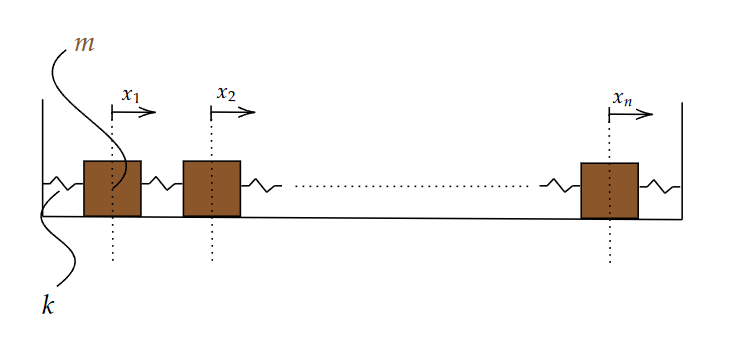
Dissertation: N-Interconnected Mass-Spring System
Dissertation-Heat Equation
Simulation of the Heat Equation in a Rectangular Room
Dissertation-Wave Equation
Simulation of the Wave Equation in a Circular Domain Using Python
Python: Object-Oriented Programming
Object-Oriented Programming (OOP) is a programming style that organizes code into objects, which store data and perform actions. This method makes programs more structured, reusable, and secure. The four main concepts of OOP are:
Windows: Basics of Command Prompt
The Command Prompt (cmd.exe) is a command-line interpreter in Windows that allows users to execute commands, run scripts, and perform administrative tasks.
Basic Electronics: Boolean Algebra
Boolean algebra is a mathematical structure used to perform operations on binary variables (0s and 1s). It is fundamental in digital logic design and computer science.
The Concept of Isospin
Isospin is a quantum number that describes the symmetry between particles with similar properties but different electric charges. It was first proposed by Werner Heisenberg in 1932 to explain the near-degeneracy of protons and neutrons. These particles, collectively called nucleons, were found to behave similarly under the strong nuclear force, suggesting an underlying symmetry.
Assignment-I
Instructions:
Explain how complex physical expressions can simplify to exponential decay through Taylor series or other approximations. Provide detailed derivations for the following cases.
Quantum Tunneling
In this article we will study:
Scattering Revisited
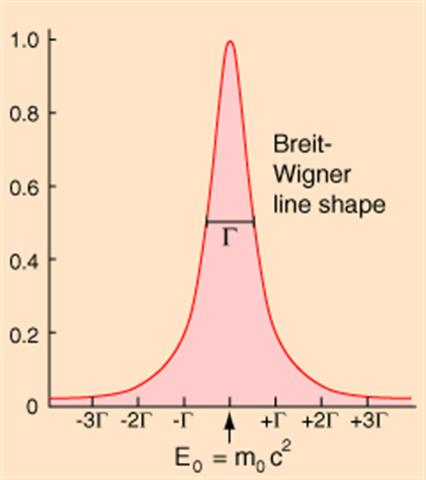
In this lecture, we will start by revisiting the basics of quantum scattering, focusing on partial wave analysis and phase shifts. The graph at the top illustrates the Breit-Wigner resonance curve, which we will discuss in detail after exploring resonance scattering and its role in energy-dependent cross-sections.
2024
Nuclear Reactions
Nuclear reactions can occur when a target nucleus $X$ is bombarded by a particle $a$, resulting in a daughter nucleus $Y$ and an outgoing particle $b$:
Basic Electronics: Semiconductors
In 1839, Becquerel discovered that some materials generate an electric current when exposed to light. This is known as the photoelectric effect and is the basis of operations of solar cells. Solar cells are made of semiconductors.
- Note: Semiconductors are materials that act as insulators at low temperatures, but as conductors when energy or heat is available.
Particle Physics: Quarks
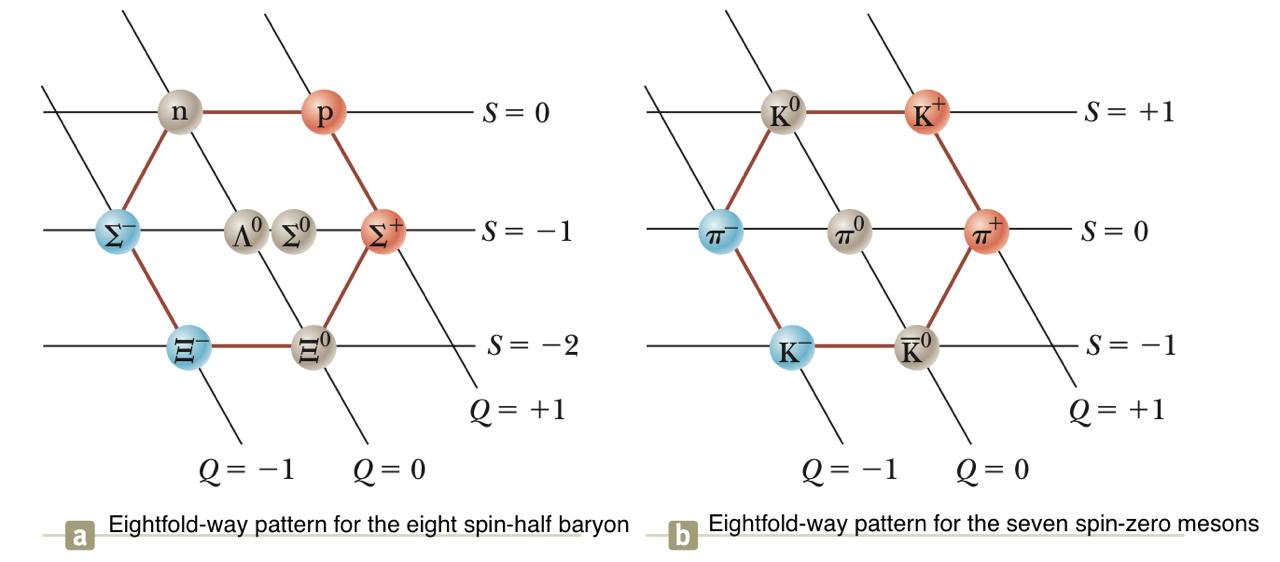
Particle Physics: Conservation Laws
The conservation laws of energy, momentum, and charge govern all processes. In particle physics, additional empirical conservation laws are also crucial. They are:
- Conservation of baryon number
- Conservation of lepton number
- Conservation of strangeness
- Conservation of isospin
- Conservation of electric charge
Particle Physics: Particle Classification
Japanese physicist Hideki Yukawa proposed in 1935 that the nuclear force is mediated by a new particle, a meson, whose exchange between nucleons causes the force. He predicted its mass to be about 200 times that of an electron, earning him a Nobel Prize in 1949. Because the new particle would have a mass between that of the electron and that of the proton, it was called a meson (from the Greek meso, “middle”)
Particle Physics Introduction
PG-III Lecture Topics
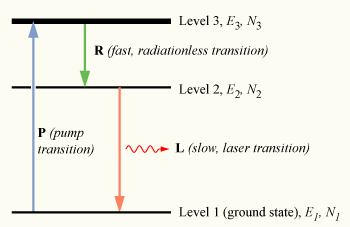
LASER Rate Equation
Stark Effect in Hydrogen Atom
In the hydrogen atom, the energy levels are determined by the principal quantum number \(n\), and for a given \(n\), the energy is given by:
Approximation Method
Perturbation theory is a powerful tool in quantum mechanics used to study systems where the Hamiltonian can be separated into a known part \(H_0\) and a small perturbation \(H'\). The goal is to find approximate solutions to the Schrödinger equation for the full Hamiltonian \(H = H_0 + H'\) by treating the perturbation as a small correction to the known system.
Scattering
Consider the Hamiltonian $H$ of the system, which is time-independent, given by
Derivations-QM: Current Density Conservation Equation
The Dirac equation for a free particle is given by:
LASER
``` Basic principles and different LASER’s: principles and working of Ruby Laser, He-Ne Laser, Solid state laser, semiconductor laser CO2 LASER and qualitative description of longitudinal and TE- LASER systems, Excimer LASER, Dye LASER, Roman LASER, Plasma recombination LASER.
Tutorial-QM
This tutorial covers Klein-Gordon and Dirac equations in quantum mechanics.
Relativistic Quantum Mechanics
Below is the outline of the lecture on Relativistic Quantum Mechanics, covering the Klein–Gordon equation, Dirac equation, probabilities and current densities, magnetic moment and spin of the electron, and free particle solutions of the Dirac equation.
Additional Resources
Science
1. What is Science?
2022
JET: Lecture-II
JET: Lecture-I
Template Page
Make the dissertation page using this template. The template includes sections for the title page, certificate/declaration, abstract, and sample chapters. You can customize the content and formatting as needed for your dissertation.
Dissertation Page
2021
KaTeX demo
Including mathematical notations in your post is possible thanks to KaTeX.
To add a math notation all you need to do is add $$ signs at the beginning and end of the notation.
An example for you guys,
Mermaid demo
Want to add diagrams, charts and visualizations in your post?
It is possible and guess what? It’s not that difficult thanks to Mermaid.
All you need to keep in mind is you’ll have to wrap your Mermaid markup in a div with class mermaid.
Here is a simple example of a basic flowchart,
2020
Google Docs + LaTeX on Mobile
🎯 Learning Objectives:
Dissertation
Technical Skills
Introduction to ADB (Android Debug Bridge)
🎯 Learning Objectives
2017
Jekyll Remote Theme Support Added
Basically Basic can now be installed remotely for use on GitHub Pages!
2013
Markup: Syntax Highlighting
Post displaying the various ways one can highlight code blocks with Jekyll. Some options include standard Markdown, GitHub Flavored Markdown, and Jekyll’s {% highlight %} tag.
Markup: HTML Elements and Formatting
A variety of common HTML elements to demonstrate the theme’s stylesheet and verify they have been styled appropriately.
Markup: Image Alignment
The best way to demonstrate the ebb and flow of the various image positioning options is to nestle them snuggly among an ocean of words. Grab a paddle and let’s get started.
Markup: Text Alignment and Transformations
Sample text to demonstrate alignment and transformation classes.
Markup: Title with Special — Characters
Putting special characters in the title should have no adverse effect on the layout or functionality.
Markup: Title with Markdown
Using Markdown in the title should have no adverse effect on the layout or functionality.
2012
Markup: Text Readability Test
A large amount of sample text to test readability of a text heavy page.
Layout: Hero Image
This post should display a large hero image at the top of a page.
Layout: Excerpt (Generated with Separator Tag)
This is the post content. Archive-index pages should display an auto-generated excerpt of all the content preceding the excerpt_separator, as defined in the YAML Front Matter or globally in _config.yml.
Be sure to test the formatting of the auto-generated excerpt, to ensure that it doesn’t create any layout problems.
Layout: Excerpt (Defined)
This is a user-defined post excerpt. It should be displayed in place of the auto-generated excerpt or post content on index pages.
Layout: External Hero Image

This post should display a large hero image at the top of a page.
2010
Post: Twitter Embed
Oh I dunno. It's probably been over 15 years since I smudged out a face with a pencil and kneaded eraser. #WIP #Sktchy pic.twitter.com/PwqbMddyVK
— Michael Rose (@mmistakes) February 1, 2017
Post: Video (YouTube)
Post: Quote
Only one thing is impossible for God: To find any sense in any copyright law on the planet.
Post: Standard
All children, except one, grow up. They soon know that they will grow up, and the way Wendy knew was this. One day when she was two years old she was playing in a garden, and she plucked another flower and ran with it to her mother. I suppose she must have looked rather delightful, for Mrs. Darling put her hand to her heart and cried, “Oh, why can’t you remain like this for ever!” This was all that passed between them on the subject, but henceforth Wendy knew that she must grow up. You always know after you are two. Two is the beginning of the end.
Mrs. Darling first heard of Peter when she was tidying up her children’s minds. It is the nightly custom of every good mother after her children are asleep to rummage in their minds and put things straight for next morning, repacking into their proper places the many articles that have wandered during the day.
Post: Modified Date
This post has been updated and should show a modified date if last_modified_at is used in the layout.
2009
Suspicio? Bene … tunc ibimus? Quis uh … CONEXUS locus his diebus? Quisque semper aliquid videtur, in volutpat mauris. Nolo enim dicere. Vobis neque ab aliis. Ego feci memetipsum explicans. Gus mortuus est. Lorem opus habeo. Jackson Isai? Tu quoque … A te quidem a ante. Vos scitis quod blinking res Ive ‘been vocans super vos? Et conteram illud, et conteram hoc. Maledicant druggie excors. Iam hoc tu facere conatus sum ad te in omni tempore? Ludum mutavit. Verbum est ex. Et … sunt occid
Check for long titles and how they might break layouts.
Antidisestablishmentarianism
This post title has a long word that could potentially overflow the content area.
Edge Case No Yaml Title
This post has no title specified in the YAML Front Matter. Jekyll should auto-generate a title from the filename.
Edge Case: No Body Content
This post has no body content and should be blank on the post’s page.
Edge Case: Many Categories
This post has many categories.
Edge Case: Many Tags
This post has many tags.
Edge Case: Nested and Mixed Lists
Nested and mixed lists are an interesting beast. It’s a corner case to make sure that lists within lists do not break the ordered list numbering order and list styles go deep enough.